OneCasino licence in New Zealand and the 2026 transition
 Available in US
OneCasino operates through One Casino Limited and holds a Malta Gaming Authority casino licence for onecasino.com. New Zealand now has its own online-casino licensing framework under the Online Casino Gambling Act 2026, with a transition period before the licensed market is expected to be fully operational in 2027. Those two regulatory layers need to be read separately: the Malta licence describes the service OneCasino operates, while New Zealand law determines the conditions for serving New Zealand customers and the route into the local licensing system.

Table of Contents
- OneCasino and the New Zealand licensing transition
- New Zealand consumer protection now has a statutory framework
- Complaints can involve more than one route
- The MGA licence identifies OneCasino’s existing authorisation
- The 2026 timetable changes the questions to ask
- Questions about OneCasino licensing
- Use the regulator that matches the issue
OneCasino and the New Zealand licensing transition
The Online Casino Gambling Act 2026 is in force and places online-casino licensing under the Department of Internal Affairs and the Secretary. The framework provides for up to 15 brand-specific licences. Entry is structured as an expression-of-interest stage, an auction and then a full licence application. The auction was scheduled for late September 2026, with successful bidders able to submit full applications in October 2026 and the licensed regime expected to be fully operational in 2027.
The transition rules matter before that final licensed market is running. Providers that were already operating in New Zealand when the Act commenced may continue during the transition. A provider that does not apply must cease by 1 December 2026. An applicant may continue while a decision is pending, subject to the statutory long-stop, but online-casino advertising to New Zealand customers is prohibited during this period.
DIA’s public material does not name a OneCasino-specific New Zealand licence or application status. That means the practical reading is narrow: OneCasino can be described through its existing operator and product facts, but the Malta authorisation cannot be treated as a New Zealand licence and no application outcome should be inferred from evidence that New Zealand customers have used the service.
For a player, the useful distinction is jurisdictional responsibility. A licence granted in one country does not automatically replace a separate licensing requirement created by New Zealand law. The question to ask in 2026 is therefore not simply whether OneCasino is licensed somewhere, but which authority governs the specific issue you are trying to resolve.
New Zealand consumer protection now has a statutory framework
The 2026 Act gives the Secretary and DIA functions covering licensing, compliance, the public register and complaints relating to online casino gambling. That creates a local statutory framework for the market rather than leaving every issue to an overseas regulator or the operator’s own procedures.
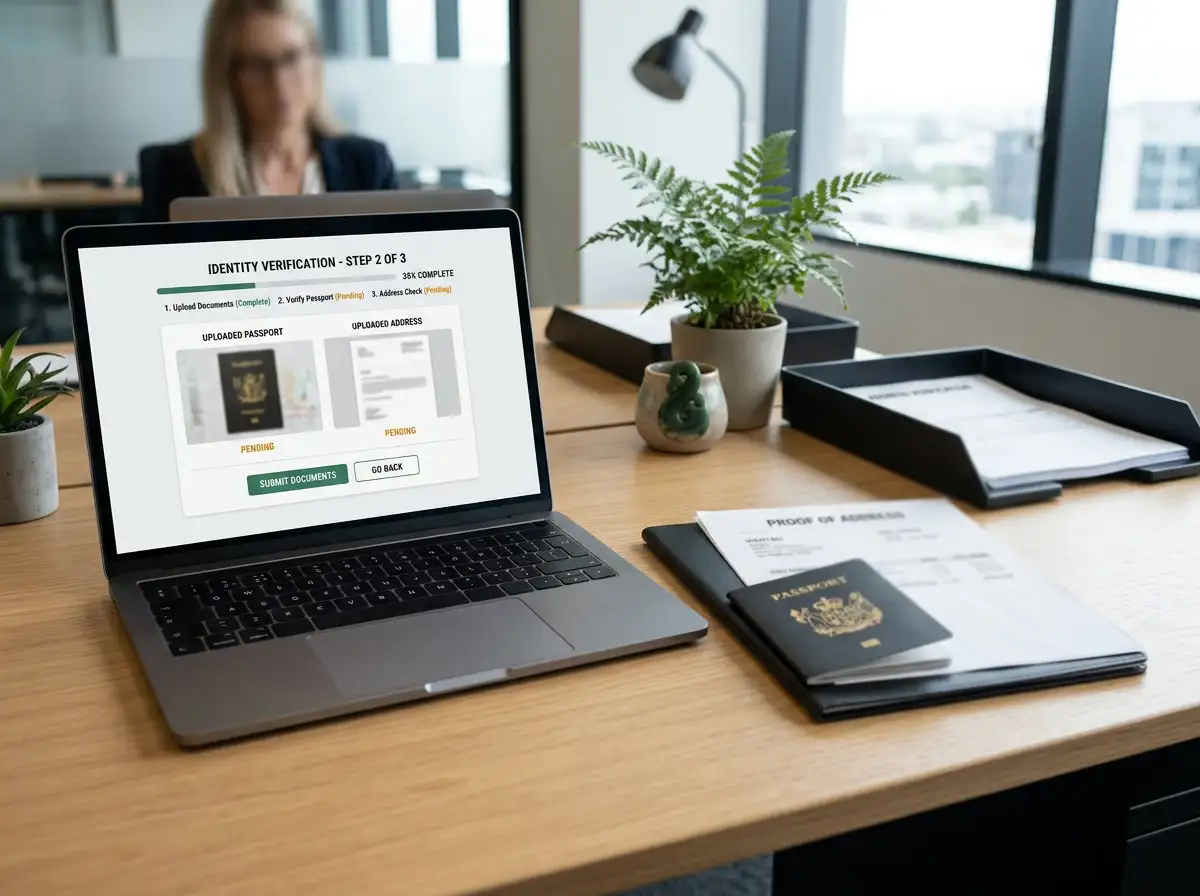
The practical effect depends on the type of problem. Account verification, payment processing and bonus rules are still governed by the operator’s terms in the first instance, so it is useful to keep copies of transaction records, account messages and the terms that applied when an issue arose. The separate OneCasino account guide explains the identity, address and source-of-funds checks that can affect account access, while the payments guide covers money movement and currency handling.
Advertising is a particularly clear part of the transition. New Zealand currently prohibits online casinos from advertising their services to New Zealand customers during this phase. That restriction is about operator conduct; it does not by itself answer a player’s individual contractual or dispute position. When a dispute turns on legal rights under New Zealand law, individual advice should come from a qualified New Zealand lawyer.
- The New Zealand framework is administered locally by DIA and the Secretary.
- Up to 15 brand-specific licences are contemplated by the 2026 regime.
- Transition eligibility depends on statutory conditions, including whether a provider was operating when the Act commenced.
- Advertising to New Zealand customers is prohibited during the transition.
Complaints can involve more than one route
The correct complaint path depends on what has happened. New Zealand’s Secretary and DIA have statutory functions to investigate complaints relating to online casino gambling. OneCasino’s Malta authorisation record also lists eCOGRA as an approved alternative dispute resolution body for the MGA-licensed service. These routes serve different legal and procedural contexts, so a complaint should be organised around the transaction, term or account action at issue.
A useful sequence is to start with a written record. Save the withdrawal request, deposit reference, account correspondence, verification requests and any relevant term. Then identify whether the matter is primarily a payment-processing issue, an account-verification issue, a disputed game or bonus term, or a broader regulatory concern. The more precisely the issue is framed, the easier it is to decide which body can actually address it.
- Document the event, amount, date and account communication involved.
- Use the operator’s complaint process and retain the written response.
- For the MGA-licensed service, consider the ADR route listed on the authorisation record where the dispute fits that process.
- For New Zealand regulatory concerns, use the local statutory complaint route administered by DIA and the Secretary.
This structure also prevents two common mistakes: treating a regulator as a general customer-service desk, or treating an operator’s internal answer as the final word on a regulatory issue. A regulator or ADR body will normally need a concrete dispute and supporting records rather than a broad statement that an account experience was unsatisfactory.
The MGA licence identifies OneCasino’s existing authorisation
One Casino Limited holds Malta Gaming Authority B2C Gaming Service Licence MGA/B2C/327/2016. The MGA authorisation identifies the service as a Type 1 casino and lotteries licence and lists onecasino.com for the licensed operation. The same record lists eCOGRA as an approved ADR body.
That is a specific authorisation, not a generic badge. It links the named company, the licence number and the domain. For a player checking whether a licence claim belongs to the casino being used, those three elements matter more than a licence logo displayed without context. A domain match helps distinguish the licensed service from lookalike sites, mirrors or unrelated businesses using a similar name.
The Malta licence also provides a separate regulatory route for matters falling within the MGA-licensed service. It should still be kept distinct from New Zealand authorisation. New Zealand’s 2026 regime is a local licensing framework with its own transition conditions, public administration and complaint functions. A foreign licence can therefore be real and relevant while still answering a different regulatory question.
| Layer | What it establishes | Practical use |
|---|---|---|
| OneCasino operator | One Casino Limited, Malta company C 73399 | Identifies the legal entity behind the service |
| MGA authorisation | MGA/B2C/327/2016, Type 1, onecasino.com listed | Links the operator, licence and domain |
| New Zealand framework | Online Casino Gambling Act 2026 | Sets local licensing, transition and complaint rules |
| ADR | eCOGRA is listed on the MGA record | Provides an alternative dispute route for the MGA-licensed service where applicable |
The 2026 timetable changes the questions to ask
The New Zealand regime is moving through a defined sequence rather than switching instantly from the old position to a fully licensed market. The September 2026 auction, October application stage and expected 2027 operational regime are milestones in that process. During the transition, continuity is tied to the Act’s conditions and advertising remains restricted.
For OneCasino, the safest practical reading is to separate what is already specific from what the New Zealand process will determine. The Malta licence number, company and domain coverage are specific. The New Zealand law, licensing model and transition rules are specific. A OneCasino-specific New Zealand licence or application outcome is not named in DIA’s public material, so it should not be filled in by inference.
This distinction matters most when a player is deciding where to direct a complaint or how much weight to give a licence statement. A Malta licence can identify the regulated overseas service and its ADR route. New Zealand law governs the local licensing transition. Keeping those roles separate gives a clearer path than treating every regulatory reference as interchangeable.
Questions about OneCasino licensing
Which New Zealand law governs online casino licensing in 2026?
The Online Casino Gambling Act 2026 creates the New Zealand licensing framework administered by the Department of Internal Affairs and the Secretary.
How many New Zealand online casino licences can be issued?
The 2026 framework provides for up to 15 brand-specific online casino licences through an expression-of-interest, auction and full-application process.
What Malta licence does OneCasino hold?
OneCasino operates under Malta Gaming Authority B2C Gaming Service Licence MGA/B2C/327/2016, with onecasino.com listed for the licensed service.
Where can a gambling complaint be directed?
The New Zealand Secretary and Department of Internal Affairs have statutory complaint functions for online casino gambling, while the OneCasino MGA record lists eCOGRA as an approved alternative dispute resolution body for the MGA-licensed service.
Use the regulator that matches the issue
OneCasino has a defined Malta licence attached to One Casino Limited and onecasino.com, while New Zealand’s Online Casino Gambling Act 2026 creates a separate local licensing and complaint framework. For practical use, keep the two layers distinct, document the issue carefully and direct it to the authority or ADR process that actually covers the service, transaction or local regulatory question involved.
Read next
Prepared by the Onecasino-nz.net editorial staff.